
Is My Home Good for Solar?
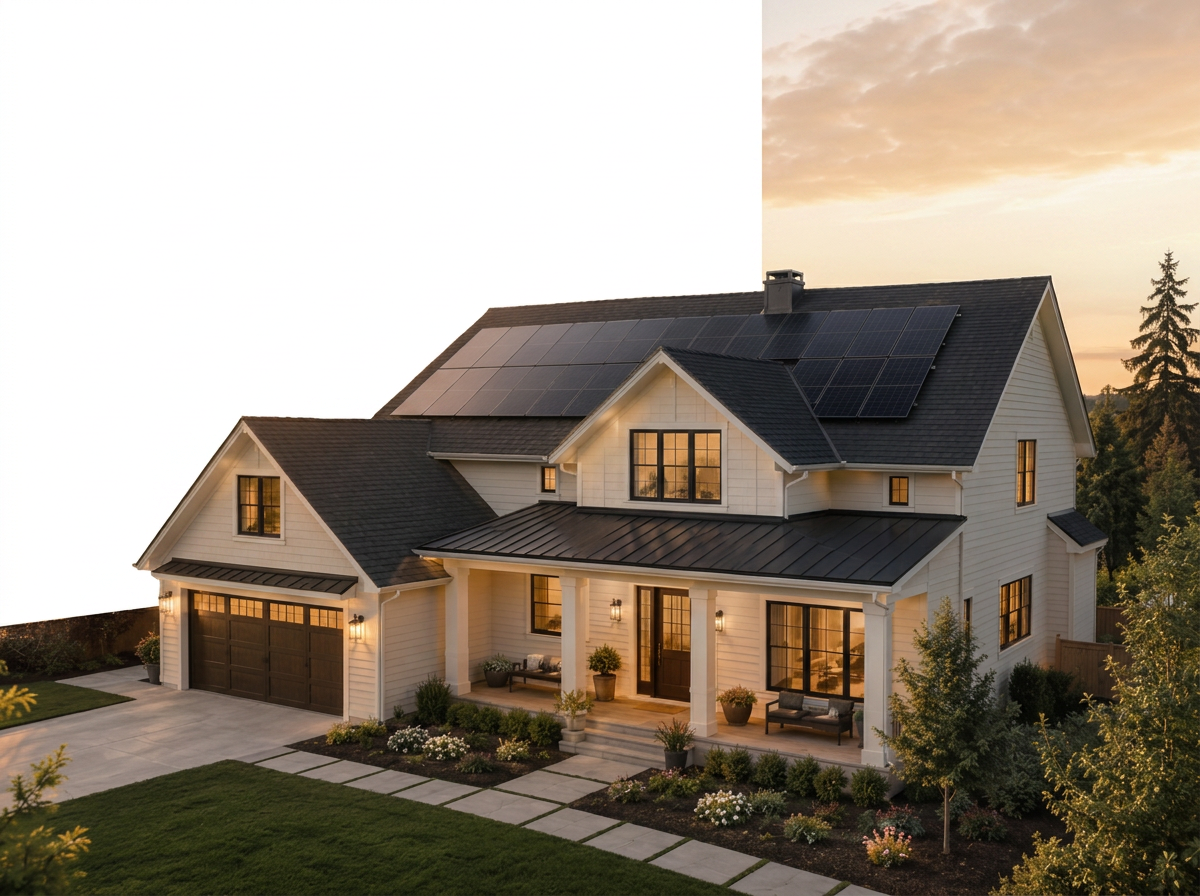
Your home doesn’t need to be perfect for solar.
It just needs the right combination of roof space, sunlight, energy use, and eligibility.
One of the most common questions homeowners ask is:
“Will solar actually work on my house?”
The answer depends on a few important factors — and some of them may be more flexible than you think.
A solar evaluation usually looks at your roof, its orientation, surrounding shade, your electricity usage, your utility company, and the programs available in your area.
Here’s what matters.
1. Your Roof
The first thing to look at is whether there is enough usable roof space for solar panels.
Solar can be installed on many common roofing materials, including:
Asphalt shingles
Metal roofing
Flat roofs
Tile roofs, depending on the installation method
Other approved roofing systems
The condition of the roof matters too.
If a roof is approaching the end of its useful life, it may make sense to repair or replace it before installing solar. A newer or well-maintained roof generally makes the installation process simpler.
The goal isn’t necessarily to cover your entire roof with panels.
It’s to find the areas that can produce the most useful energy for your home.
2. Roof Orientation
You may have heard that a roof has to face perfectly south to qualify for solar.
That’s not necessarily true.
South-facing roof sections can provide excellent solar exposure in many parts of the United States, but east- and west-facing roofs can also work very well.
A professional solar design looks at the specific shape of your roof and determines where panels are likely to produce the most energy throughout the day.
Sometimes panels are even divided across multiple roof sections to create the best overall system.
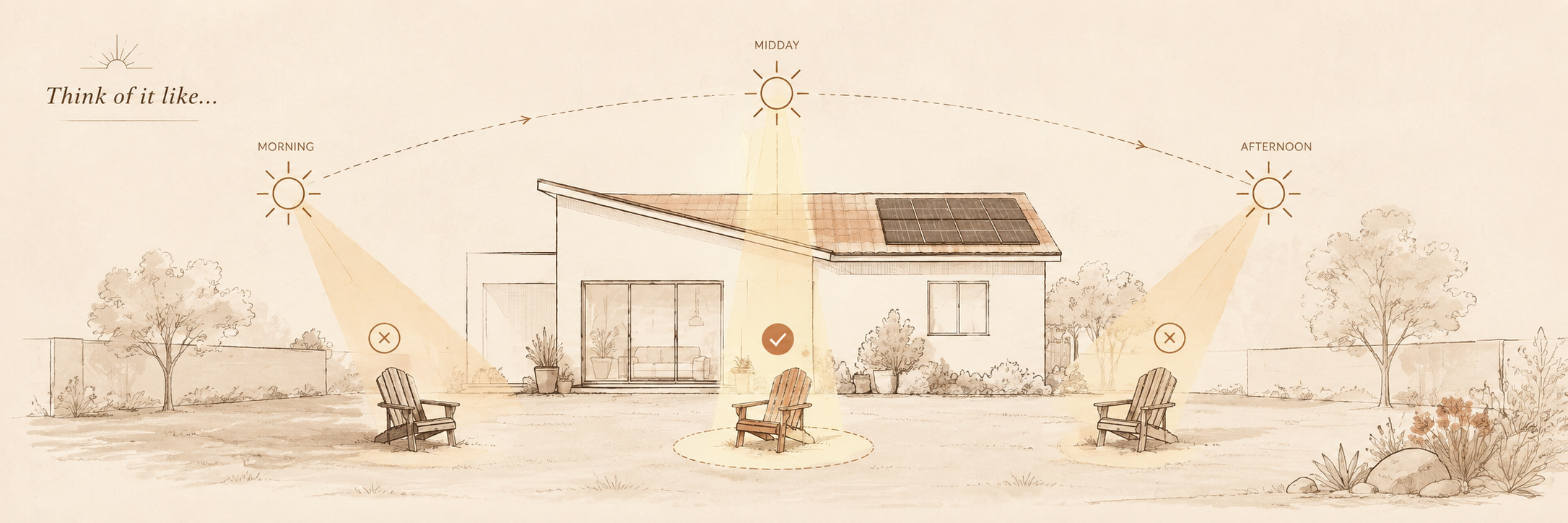
Think about placing a chair outside to enjoy the sun.
You wouldn't automatically put it in one specific corner of the yard.
You'd look at where the sun actually reaches throughout the day.
Solar design works in a similar way.
The goal is to place the panels where your home receives the best usable sunlight.
3. Shade Around Your Home
Trees, neighboring buildings, chimneys, vents, and other objects can create shade.
But having some shade does not automatically mean your home can't go solar.
Modern solar designs can account for changing sunlight throughout the day and throughout the year.
What matters is how much usable sunlight reaches the proposed panel locations.
For example, a tree that creates a small amount of shade early in the morning may have a very different impact than a large tree blocking the roof during peak daylight hours.
This is why solar companies evaluate the property before designing the final system.
4. Your Electricity Usage
Your electric bill is one of the most important pieces of the puzzle.
Why?
Because the solar system is generally designed around how much electricity your home actually uses.
A home that consumes significantly more electricity may need a larger system than a home with lower consumption.
Looking at several months — and ideally a full year — of electricity usage helps identify seasonal changes caused by things like:
Air conditioning
Electric heating
Pools
Electric vehicles
Home offices
Large appliances
Changes in household size
The objective is not simply to install as many panels as possible.
It is to design a system that makes sense for the home's energy needs and available roof space.
5. Your Utility Company
Your utility matters because solar works together with the electrical grid.
Even with solar panels, most homes remain connected to their utility.
During periods when the solar system produces electricity, that energy can help supply the home's needs. Depending on the utility, state, applicable rate structure, and program rules, excess solar production may also receive credits or other forms of compensation.
Those rules can vary significantly from one utility territory to another.
That's why two homes that look almost identical may receive different solar proposals if they are served by different utilities.
At Good Solar Quotes, understanding the utility is part of determining which solar options may make sense for the homeowner.
6. Solar Program Eligibility
A house can have a great roof and plenty of sunlight and still need to meet the requirements of the specific solar program being considered.
Eligibility can depend on factors such as:
Property ownership
Utility service territory
Historical electricity usage
Available roof space
Condition of the property
Program availability
Financing or TPO requirements
Local permitting rules
Exact requirements vary by provider, utility, state, and program.
For homeowners considering a Third-Party Ownership (TPO) option, the evaluation also determines whether the property qualifies for that particular agreement.
With a TPO structure, a third party owns the solar system during the agreement while the homeowner uses the electricity it produces.
This can allow eligible homeowners to access solar without purchasing the equipment upfront, while potentially lowering the effective cost of the electricity they use.
The exact savings, rates, ownership terms, utility charges, and eligibility requirements depend on the agreement and location.
What If My Home Isn’t Perfect?
Very few homes are.
One roof section might face east.
Another may have some afternoon shade.
There may be vents in the middle of the best roof area.
That doesn't necessarily eliminate solar as an option.
Solar design is about working with the property you have.
Installers can often use different roof sections, adjust panel placement, work around obstructions, or design a system based on the areas receiving the strongest sunlight.
The question isn't:
“Is my house perfect for solar?”
The better question is:
“Can a solar system be designed that makes sense for my home?”
The Easiest Way to Find Out
You don't need to calculate roof angles, measure sunlight, or understand utility rate structures yourself.
A solar evaluation can look at the property, roof, electricity usage, utility company, and available programs to determine whether solar is worth exploring.
And if the numbers don't make sense?
You should know that before moving forward.
At Good Solar Quotes, our goal is to help homeowners understand their options clearly and compare solutions that fit their specific home and energy needs.
Is Your Home a Good Fit for Solar?
There’s only one way to know for sure: look at the actual property and the actual numbers.
See if your home qualifies and get a personalized solar quote.
